Protecting Minorities and Immigrants with U.S. Passports

Across the United States, many minority communities are facing a troubling reality: fear of being stopped, questioned, or even detained by immigration enforcement despite being U.S. citizens. 

Reports from civil rights groups and investigative journalists have documented cases where Black, Latino, and Native American individuals were treated as if they did not belong, even being arrested or held without clear cause. These incidents are not just isolated mistakes; many advocates argue they reflect broader patterns of racial profiling and unequal treatment.

This creates an urgent question: how can citizens better protect themselves in situations where their status is unfairly challenged?

One practical step is carrying a U.S. passport. While driver’s licenses, Real IDs, and even birth certificates can establish identity, they are not always recognized as definitive proof of citizenship in high-pressure encounters. A passport, however, is widely accepted as the strongest, most immediate documentation of U.S. citizenship. In moments where misunderstanding or bias may come into play, having that proof readily available could make a critical difference.
The importance of this issue has grown in recent years as enforcement tactics have expanded. Advocates point to reports of individuals being stopped based on appearance, language, or occupation rather than evidence. In this environment, preparation becomes a form of protection.

But this is not just an individual responsibility—it is a community one. Helping neighbors, friends, and family members obtain passports can be a powerful way to support safety and dignity. This might mean sharing information about application steps, assisting with fees, or organizing local support efforts.

Ensuring that more citizens have access to clear, recognized proof of their rights is a simple but meaningful step toward reducing harm. In uncertain times, small actions like these can help communities stand stronger together.

Please see our resource document for steps to obtaining a passport under various circumstances. 

If you are interested in joining Buddhist Action Now’s campaign to help U.S. citizens procure passports for their protection, please reach out via the contact form on this website.


Life, Liberty, and the Pursuit of Happiness

By Starlit Swan

The Constitution gave us

the unalienable right

to Life, Liberty, and the Pursuit of Happiness.

You are trying to strip away

what made this country.

The seeds of freedom

that took root

when Blacks were freed.

The seeds that bore fruit

when Blacks attained their Civil Rights.

You are trying to forget

what made this country.

The people before the discovery,

before the colonization of this ancestral land.

The living heritage

of cultures and traditions

since time immemorial.

You are trying to wake up

from what made this country.

The aspiration of a dream

that drove people to this land

in search of a better life.

You are trying to take away

what made this country,

our country.

Our sense of safety taken away

under the boot of racial profiling.

You are making us live

as if we don’t belong here

where we were born.

Our freedom, stripped.

Our dream, becoming a waking nightmare.

Our diversity, forced into an uniformity

we cannot conform with.

We need to carry a passport

for our own safety

in our own country

to prove that we belong…

that we are home.

When will the fruit of freedom ripen?

When will the dream become reality?

When will we be included?
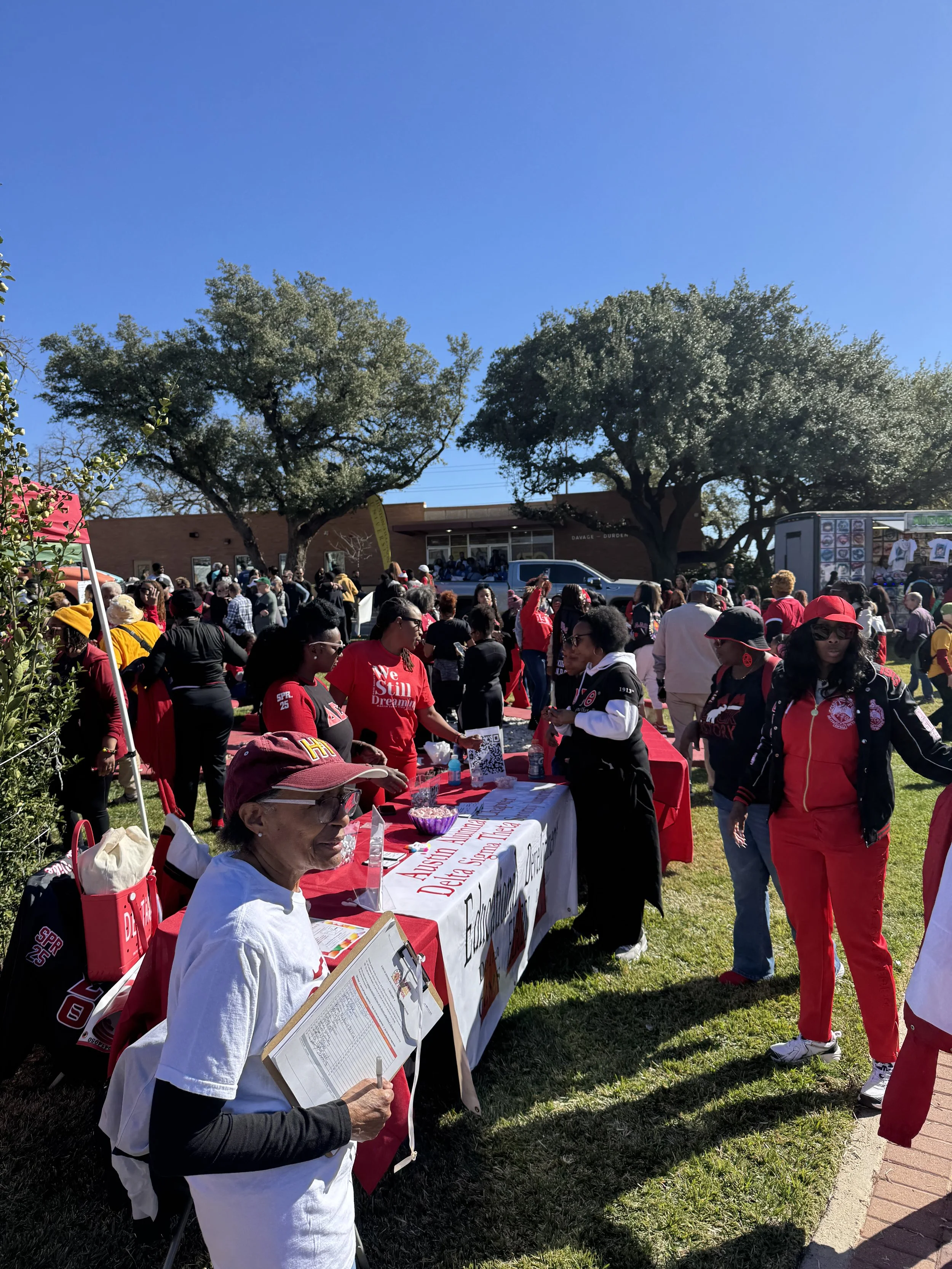
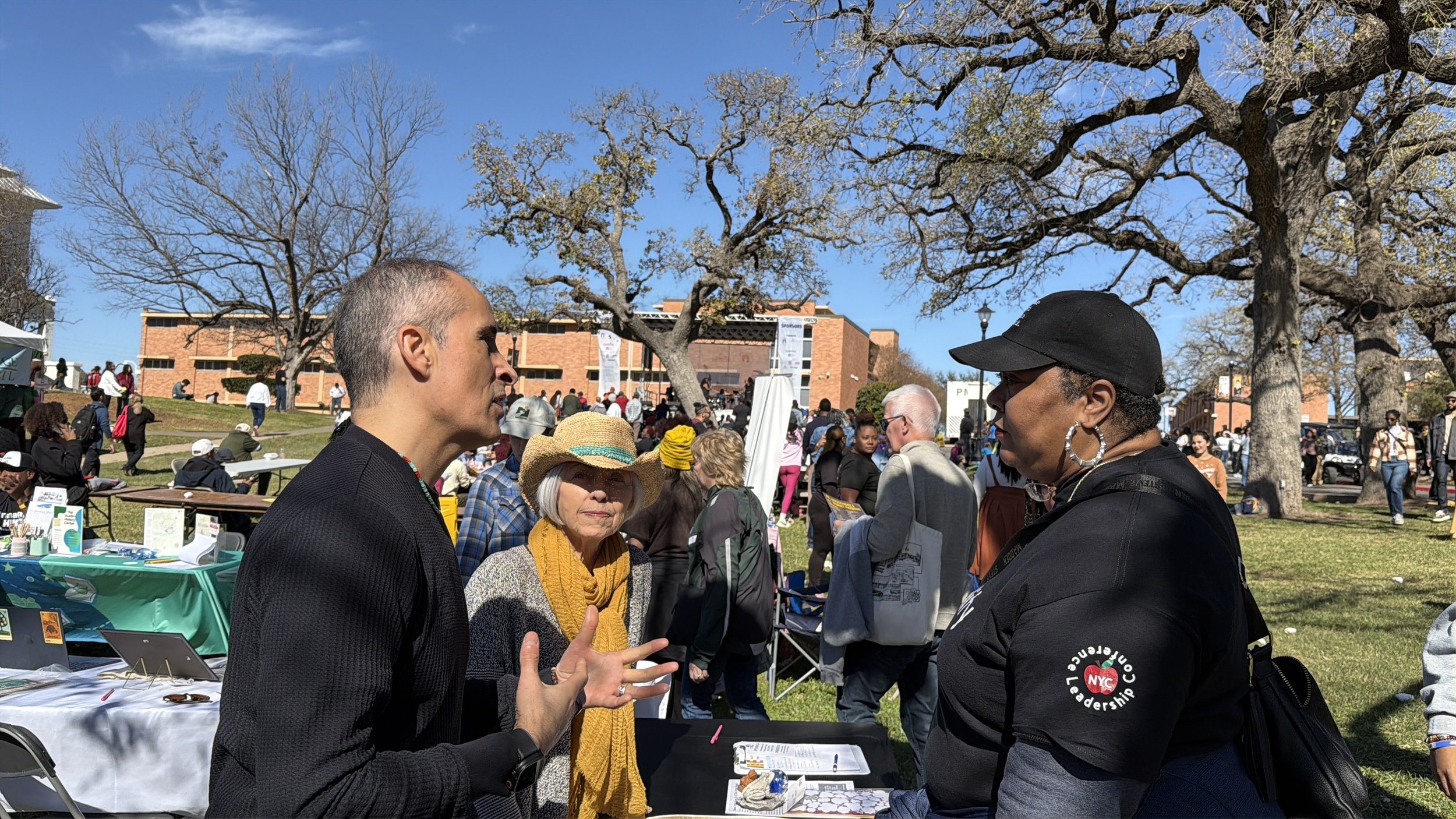
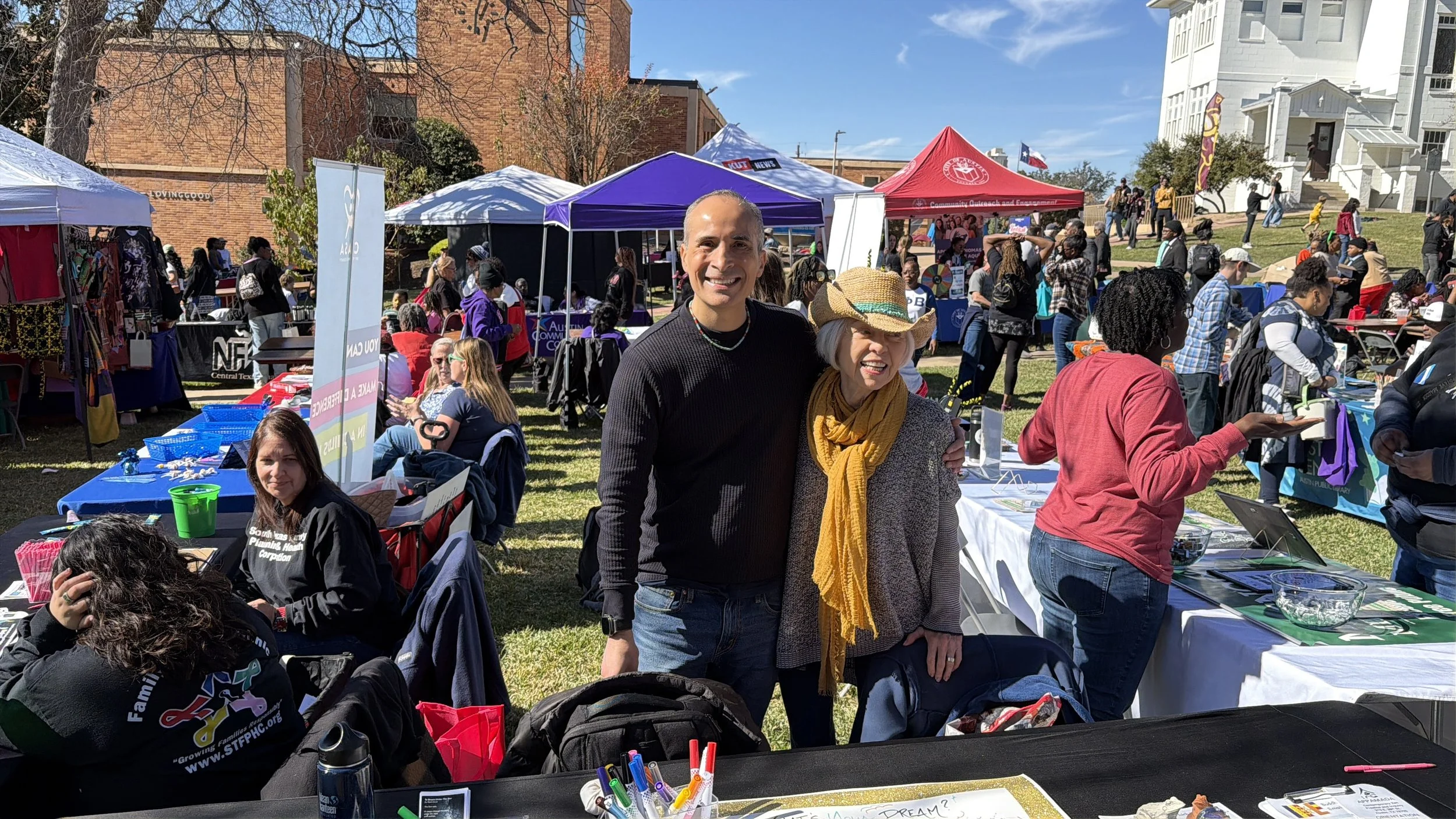
Buddhist Action Now at Huston-Tillotson's MLK Day Festival | 1.19.26

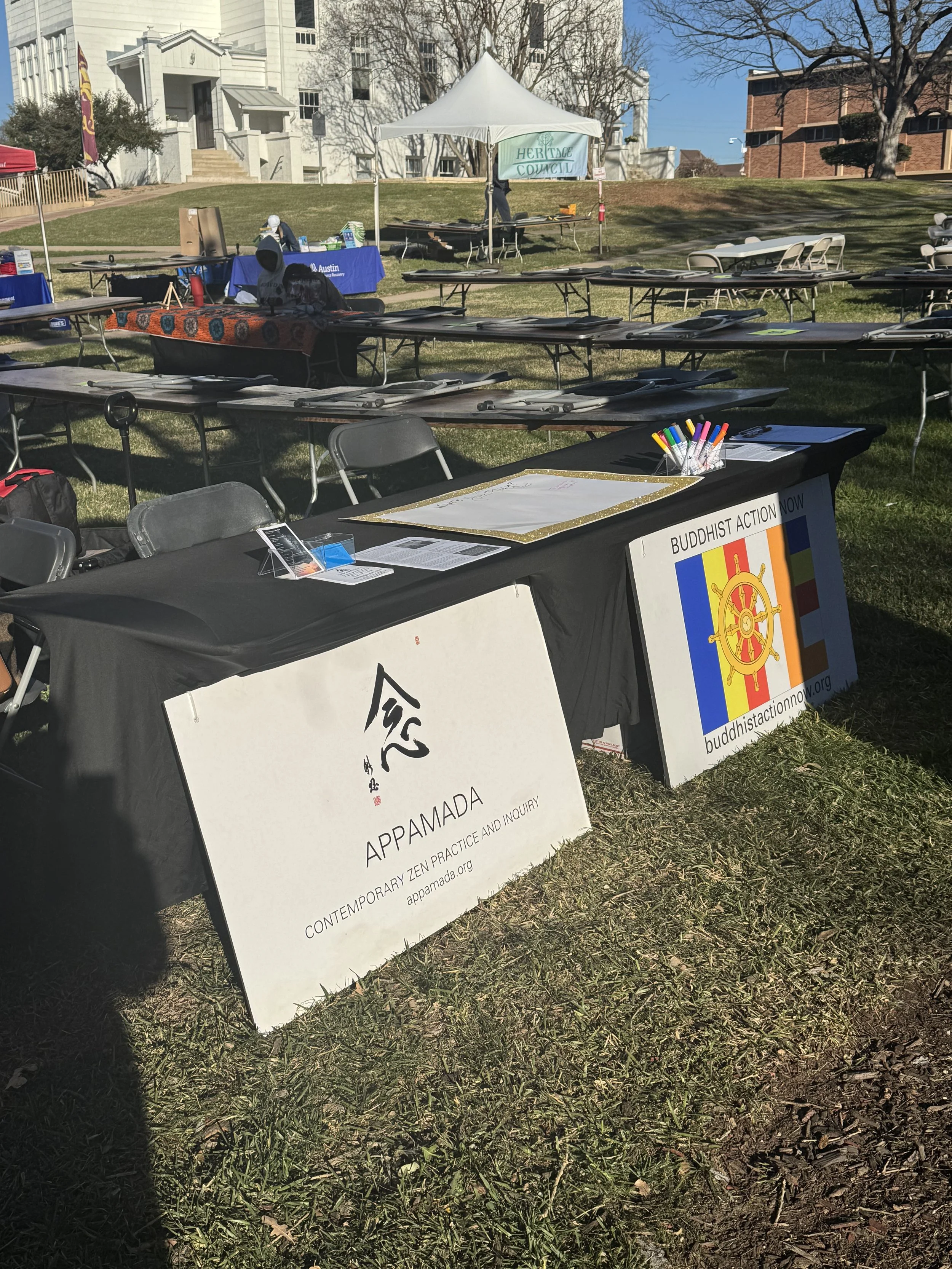
On Monday, January 19, 2026, Buddhist Action Now was honored to participate in the annual Martin Luther King, Jr. Day festival at Huston-Tillotson University.

Huston-Tillotson University, established in 1875, is an HBCU and the oldest institution of higher learning in Austin. Its gently rolling landscape, historical buildings, and central location make it a perfect location for this event. The festival was scheduled at the end point on the route of the MLK Day March which began that morning on the steps of Texas State Capitol.

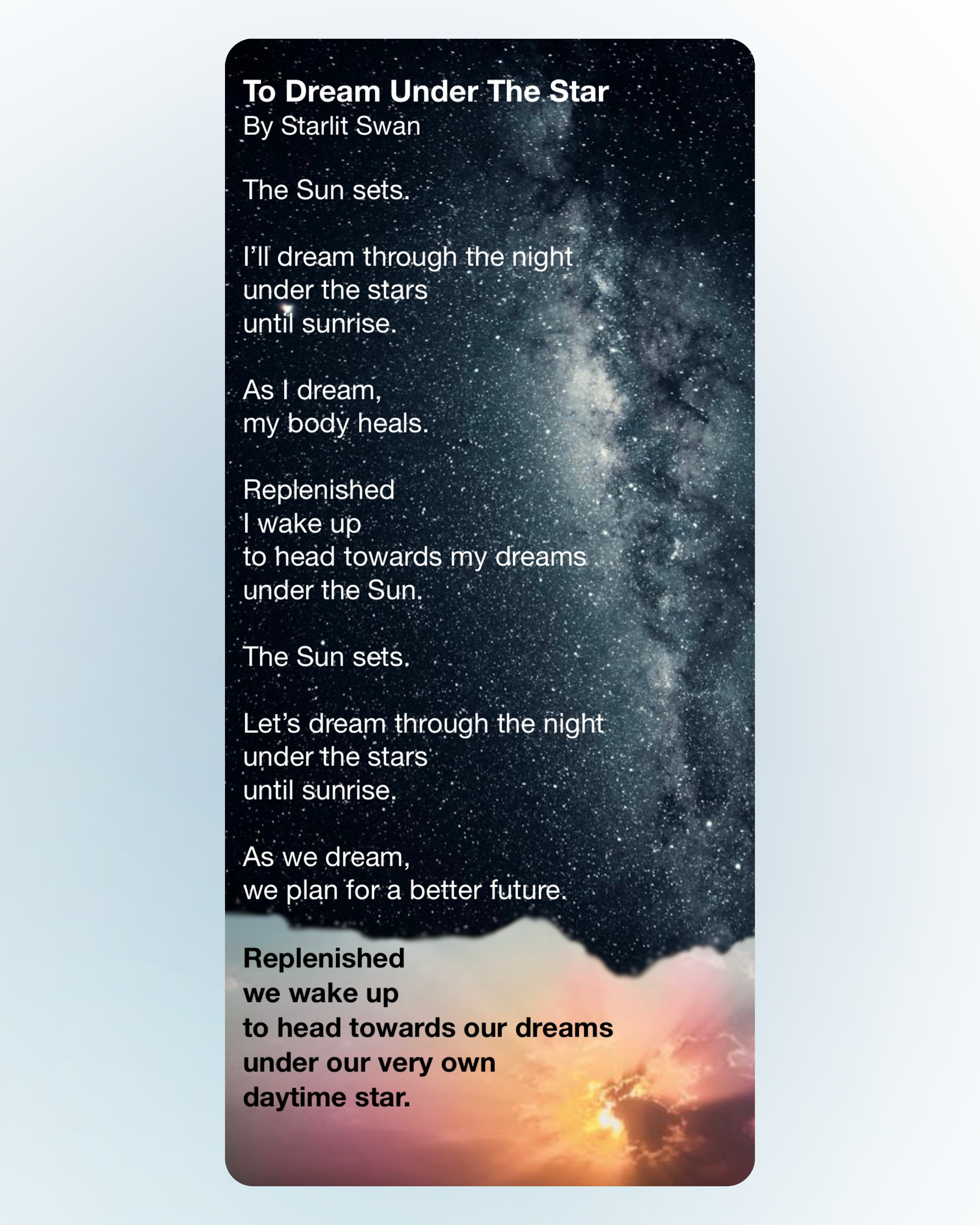
Buddhist Action Now had reserved a spot, and our group spent time at our meetings leading up to the event brainstorming things we could do to engage folks. These included a poster board with the invitation for people to share their dreams, a handout with the story of Martin Luther King, Jr. and Thích Nhất Hạnh’s friendship, and a poem written by one of our members, Starlit Swan.

Shortly after 11:00am, waves of people began to arrive on the campus grounds, which had already been set up to welcome them. Hundreds of vendors, nonprofit organizations, and entertainers were there for the family-friendly event. The weather, which had been chilly that morning, turned a blissful temperature around midday, giving the event a true festival feeling.

Our volunteers were onsite from 9:30 a.m. to 3:30 p.m. and all report having had great conversations with attendees who expressed interest in Buddhist Action Now, and in our meditation offerings at Appamada.

While we were heartened to see the interest, our main purpose in having a table was to demonstrate our solidarity with the movement for Black liberation, and our support of nonviolent resistance in the pursuit of the liberation of all beings.

We are grateful for the opportunity to have been part of the event, and for the time and energy and other resources contributed by the members of Buddhist Action Now.


Interested in putting your values into action? We invite you to join us for Buddhist Action Now meetings each Saturday at 1:00 p.m. Central Time. You can also sign up to receive our group emails or learn more about Buddhist Action Now by sending an inquiry via our contact page.


Buddhist Action Now at Austin Pride | 8.23.25

This summer, Buddhist Action Now found new vitality and a new working group structure. One of our working groups is focused on direct action. They are charged with finding ways for Buddhist Action Now to align with our larger communities and participate in activities that reflect our values. 

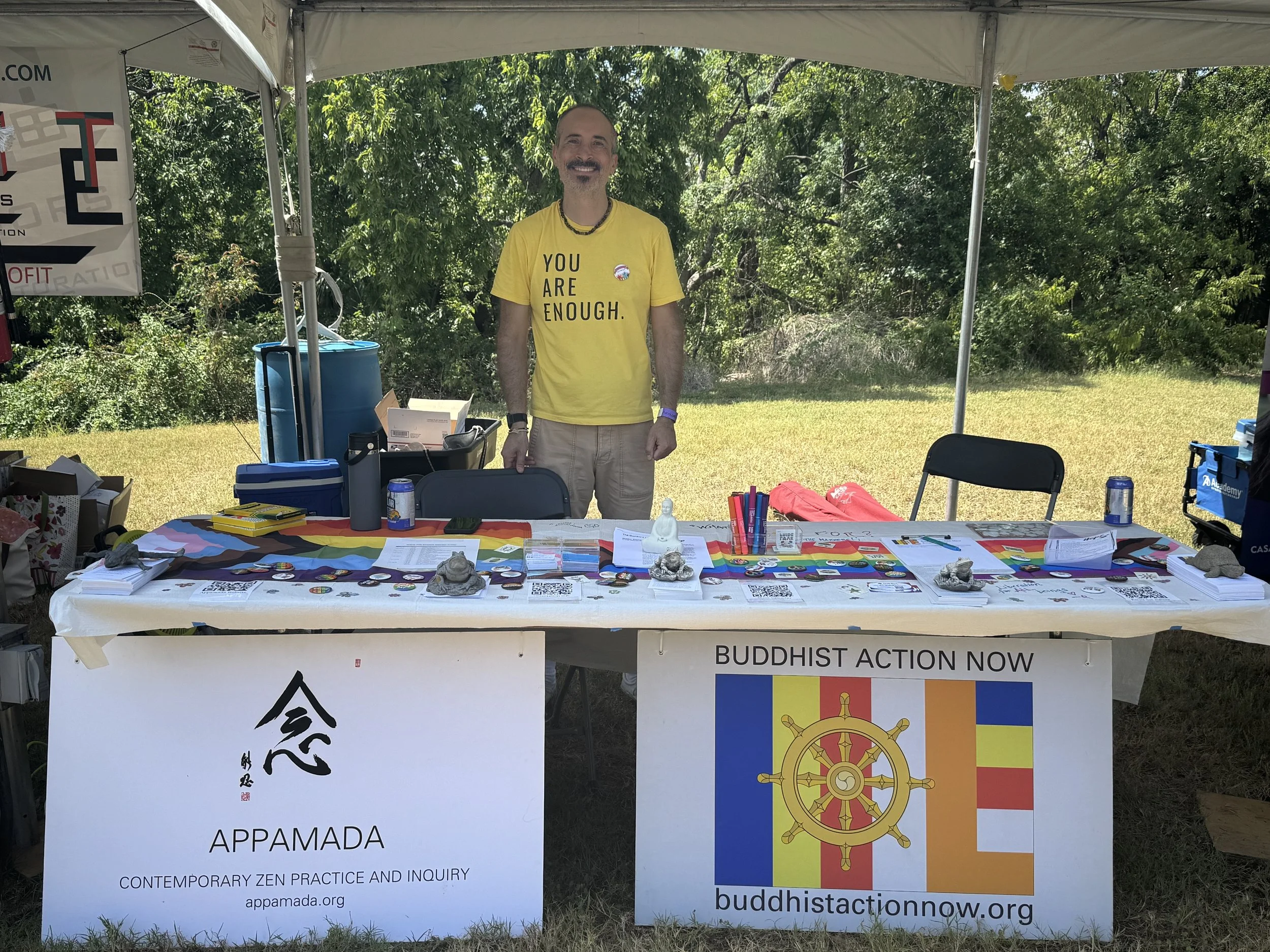
The very first event this working group chose took place on Saturday, August 23, 2025, at Austin Pride, an event that has long been cherished at our sangha. The direct action working group secured a vendor spot for us, and on the day of the event, a handful of our members traveled down to Metropolitan Park in the middle of Austin to set up and connect with our LGBTQ+ friends. The day was, unsurprisingly, hot and muggy. But that didn’t dampen anyone’s enthusiasm. We were delighted to see a gorgeous diversity of human beings enjoying the celebration. Some wore costumes, and most wore rainbows in some form or fashion.

To engage with the attendees, the direct action working group came up with an activity: we placed a white paper tablecloth down and set out colorful markers. We then asked passersby to share with us “What do you HOPE for?” Everyone from elementary school-aged kids to silver-haired elders paused to reflect and write their hopes on our table. (See video below) Some of their responses were humorous, while others were profound. All were shared freely. Additionally, one of our Buddhist Action Now members who was unable to attend the event shared a poem she’d written titled “Hope,” and we handed that out to the visitors to our booth.

As the tablecloth began to fill up with colorful sentiments, a feeling of gratitude came over our Buddhist Action Now team. How could we help but feel optimistic, surrounded by all that hope? It was a poignant reminder that those who wholeheartedly perform a service often receive as many benefits as those being served.

Buddhist Action Now is Appamada’s social justice action group. Our efforts are focused on taking measurable action to alleviate suffering and support those working for justice in ways that align with our Buddhist values. We view our activism as part of our practice, and therefore, our foundational values include the Paramithas, Precepts, and Four Noble Truths.

Sign up for our
newsletter, or join us at one of our meetings.

Appamada Diversity, Inclusion and Equity Survey 2019

Appamada is committed to focusing on diversity, inclusion and equity. As part of this process we are doing three surveys. In 2019 we did a survey (below) to discover how the sangha sees itself in terms of diversity, inclusion, and equity. In the upcoming the second survey we’ll be asking how you see yourself in this context. This will help us form a baseline as we grow in these areas. The third survey will ask for your ideas for the sangha to make it more accessible and beneficial to all. We would like you to comment below on any insights or reactions to the survey below. Thanks, Buddhist Action Now (who is doing the surveys)

  1. What do you believe is the demographic composition of Appamada now?  (Feel free to estimate)

imagenumber1.png

2. What percentage of people at Appamada do you believe self-identify other than White alone?(Including Asian, Latinx/Hispanic, Black/African-American, Native American/Alaska Native, Native Hawaiian/Pacific Islander, Multi-Racial)

imagenumber2.png

3. What percentage of people at Appamada do you believe are LBGTQ (Lesbian, Bisexual, Gay, Transgender, Queer)?

imagenumber3.png

4. What percentage of people at Appamada are persons with disabilities? (The ADA defines a person with a disability as a person who has a physical or mental impairment that substantially limits one or more major life activity.

imagenumber4.png

How important is it to you that Appamada become more diverse, equitable and inclusive?

Diversity means demographic composition of the people in a group or organization, and the degree to which they reflect the makeup of their democratic community at large. Answer this question based on this definition of diversity.

5. In your view, becoming more DIVERSE as a sangha is:

imagenumber5.png

Equitable means to make an organization accessible to all, and to identify and mitigate barriers or obstacles to full participation or access. Answer this question based on this definition of equanimity.

6. In your view, becoming more EQUITABLE as a sangha is:

imagenumber6.png

Inclusivity means the culture of an organization, and the degree to which all perspectives are included, all people are valued and everyone is treated with dignity and respect.

7. In your view, becoming more INCLUSIVE as a sangha is:

imagenumber7.png

What, if anything, are you aware of that Appamada has done to try and diversify their leadership?

8. Appointment of diverse members to leadership roles: (17 people did not answer)

imagenumber8.png

9. What internal education/training has Appamada done to try to diversify? (30 people did not answer.)

imagenumber9.png

10. What partnerships or memberships has Appamada participated in to try to diversify? (21 people did not answer.)

imagenumber10.png

11. What community outreach has Appamada done to try to diversify? (15 people did not answer.)

imagenumber11.png

12. What other strategies has Appamada done to try to diversify? (17 people did not answer.)

imagenumber12.png

13. What marketing or advertising has Appamada done to try to diversify? (27 people did not answer.)

14. If you have worked to diversify membership, what increases have you seen in any of the following groups, including how much of an increase? (26 People did not answer.)

imagenumber14.png

15. How much of an increase in diversity have you seen? (% of increase.) (28 people did not answer.)

imagenumber15.png

16. What has Appamada done to try and become more equitable in our operations and inclusive in our culture? (13 people did not answer.)

imagenumber16.png

17. If you have worked to increase equity and inclusion, has that work resulted in change, and how much change? (32 people did not answer.)

imagenumber17.png

18. What percentage in increase have you seen in equity and inclusion? (35 people did not answer.)

imagenumber18.png